Introduction
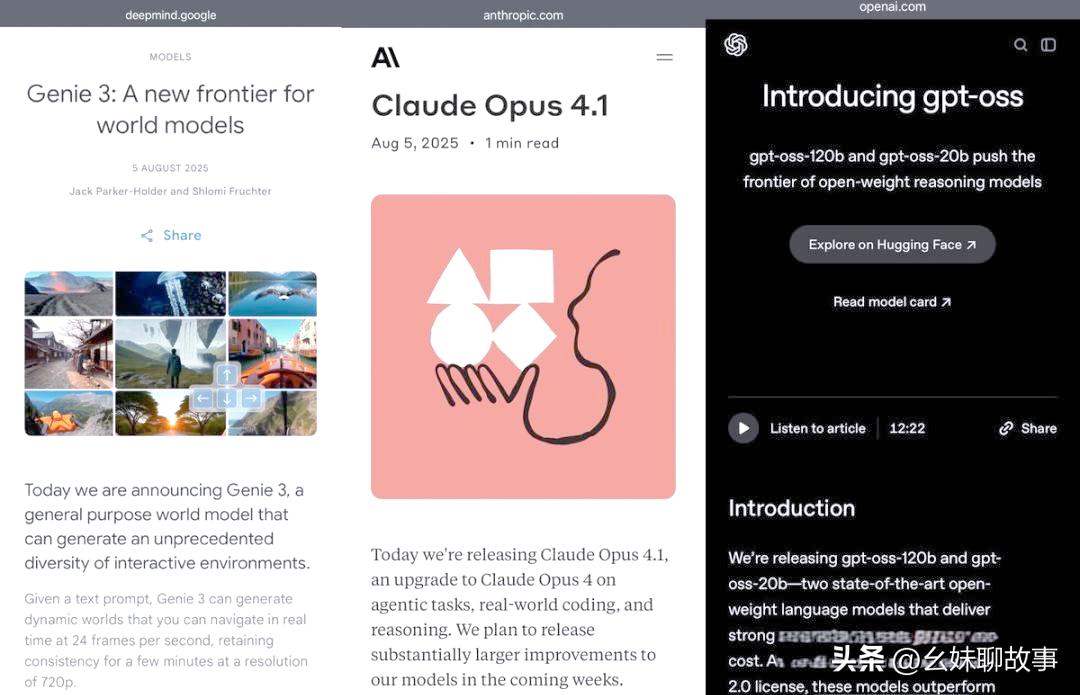
Claude Opus 4.7 was unexpectedly released by Anthropic, causing a stir in the AI community. This update is not just a minor improvement; it truly enhances usability for everyday users, programmers, and office workers.
Key Improvements in Version 4.7
Anthropic focused on three main areas for this update: more stable coding, clearer image recognition, and better command execution. The pricing remains unchanged at $5 per million tokens for input and $25 per million tokens for output, which is significantly more affordable than the rumored Mythos Preview.
1. Coding: Less Supervision Required
- The authoritative SWE-bench Pro benchmark score has increased to 64.3%, surpassing version 4.6 by 11 points and outperforming GPT-5.4’s 57.7%.
- In practical tests, 1,700 lines of code were processed with nearly zero bugs.
- It can handle multi-file refactoring and complex functionalities independently, checking and correcting itself along the way.
- A new command,
/ultrareview, allows for line-by-line code review, acting like a seasoned programmer.
For programmers, this is not just an enhancement; it’s a liberation. Tasks that used to take half a day can now be completed with minimal oversight.

2. Image Recognition: Tripled Clarity
- The image resolution has been boosted to 2576 pixels (about 3.75 million pixels), more than tripling the previous version.
- It can now accurately interpret complex tables, dense reports, software screenshots, design drafts, and hand-drawn images.
- The visual testing score jumped from 54.5% to 98.5%, nearing perfection.
- Given a cover image, it can generate a complete set of web pages or PPTs in the same style.
This is particularly useful for designers, operations personnel, finance, and data analysts, allowing for quick data extraction and analysis from screenshots and reports.
3. Command Execution: Strict Adherence to Instructions
The most noticeable change is its strict adherence to commands without unnecessary elaboration. Unlike previous versions, which often added unwanted information, version 4.7 executes commands word-for-word, reducing errors in office tasks, report writing, and data handling.
4. Self-Error Checking
The AI now verifies its outputs before returning results, checking logic and calculations to minimize rework.
Performance Comparison
In various tests, Claude Opus 4.7 has shown clear advantages over GPT-5.4 and Gemini 3.1 Pro in practical applications:
- Programming and software engineering: Opus 4.7 > GPT-5.4 > Gemini 3.1 Pro
- Document analysis and financial reporting: Opus 4.7 leads significantly with an 80.6% accuracy compared to GPT-5.4’s 51.1%.
- For multilingual tasks and scientific reasoning, GPT-5.4 and Gemini have a slight edge.
- In online searches, version 4.7 has slightly regressed compared to its predecessor.
In summary, for development, coding, reporting, and image analysis, Opus 4.7 is currently the strongest option available.
Practical Use Cases for Everyday Users
Many people feel AI is irrelevant to their daily lives, but version 4.7 is designed to assist in common workplace tasks:
- Office Workers/Administrators: Quickly extract key points from lengthy contracts and reports, summarize data, and create comparison tables in minutes instead of hours.
- Designers/Operations/New Media: Generate design ideas, color schemes, and layouts based on reference images, and analyze competitor materials with clarity.
- Programmers/Technicians: Handle complex projects, bug fixes, and code reviews autonomously, significantly reducing debugging time.
- Students/Freelancers: Efficiently write papers, organize literature, and conduct data analysis with accuracy.
Limitations and Considerations
Despite its strengths, version 4.7 has some drawbacks:
- Prompting needs to be more specific; vague prompts from version 4.6 may not work.
- Token consumption has increased by 20%-35% compared to 4.6, which could lead to higher costs.
- Online search capabilities have weakened, making it less effective for deep research.
- The cost remains high for personal users, whether through subscription or pay-per-use.
Conclusion
For programmers, data analysts, and professionals in various fields, upgrading to version 4.7 is highly recommended for improved efficiency and reduced rework. For general office workers and students, it’s worth trying, especially if their tasks involve handling documents and images. However, for casual users seeking simple interactions, it may be excessive.
In the rapidly evolving world of AI, Claude Opus 4.7 stands out by focusing on practical applications rather than gimmicks. It transforms AI from a toy into a valuable tool, allowing users to offload repetitive tasks and focus on more valuable work. Embracing AI tools like 4.7 is essential for staying relevant in the job market.
Comments
Discussion is powered by Giscus (GitHub Discussions). Add
repo,repoID,category, andcategoryIDunder[params.comments.giscus]inhugo.tomlusing the values from the Giscus setup tool.