Cursor 2.0 is Here!
Cursor has made significant updates with the release of its first coding model, Composer, and a new interface for parallel collaboration among multiple agents.
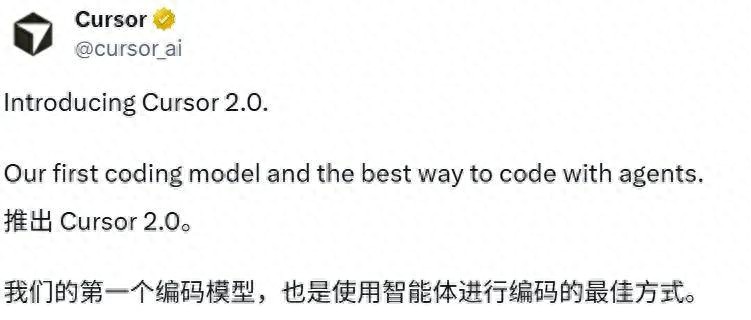
This is a pivotal moment for Cursor. While it has been popular, it has often been labeled as the “VS Code of the AI era” due to its reliance on third-party models like Claude and GPT. This dependency has been both a starting point and a limitation for Cursor.
The launch of Composer marks Cursor’s “declaration of independence” from these constraints, signifying its evolution from an “AI shell” to an “AI native platform.”
Composer: The In-House Model
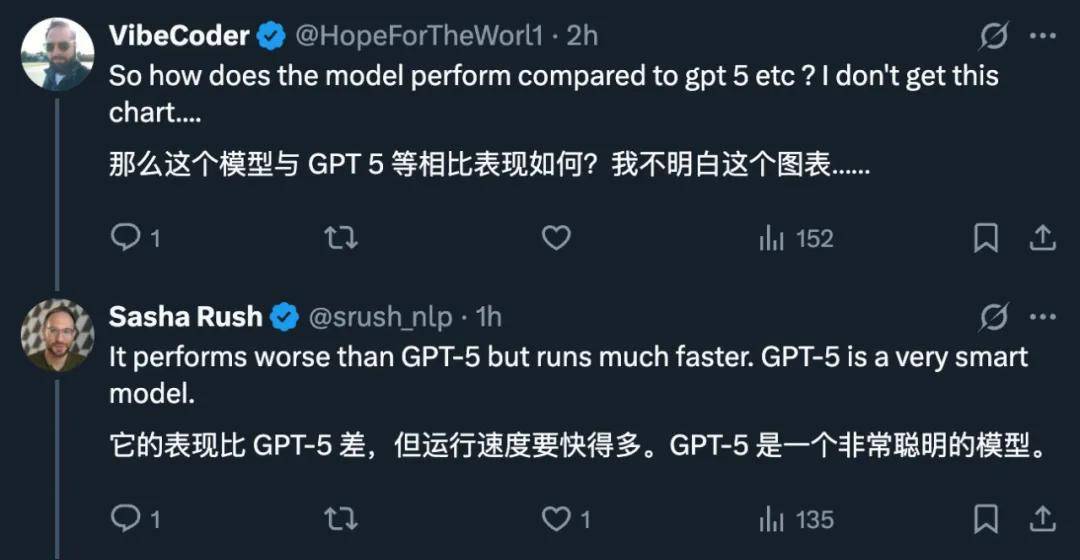
Composer is a cutting-edge model that, while not as intelligent as top-tier models like GPT-5, boasts a remarkable speed, achieving four times the generation rate of similarly intelligent models.
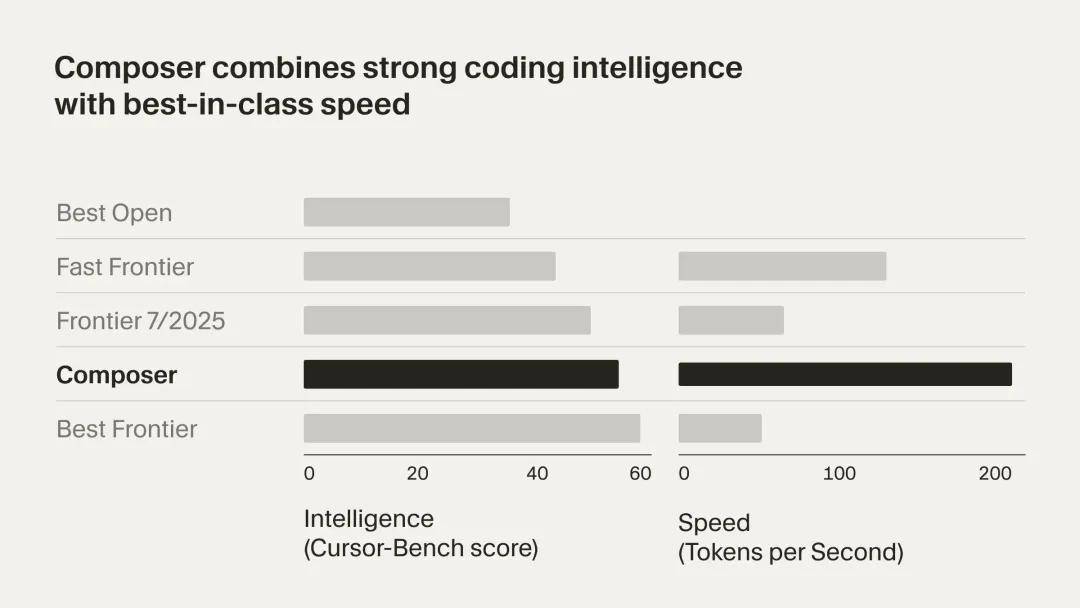
In benchmark tests, Composer demonstrated state-of-the-art coding intelligence with a generation speed of 250 tokens per second—about double that of leading fast inference models and four times that of comparable systems. (Note: Cursor categorizes models into several types: “Best Open Source” (e.g., Qwen Coder, GLM 4.6), “Fast Frontier” (Haiku 4.5, Gemini Flash 2.5), “2025 July Frontier” (the strongest models available mid-year), and “Best Frontier” (including GPT-5 and Claude Sonnet 4.5). Composer matches the intelligence level of mid-tier frontier systems while achieving the highest recorded generation speed across all test categories.)
The model is designed for low-latency agent-based coding within Cursor, with most interactions completed within 30 seconds. Early testers have praised its rapid iteration capabilities and are willing to trust it with multi-step coding tasks.
Officially, Composer is trained using a powerful set of tools, including semantic search that covers entire codebases, significantly enhancing its understanding and handling of large codebases.
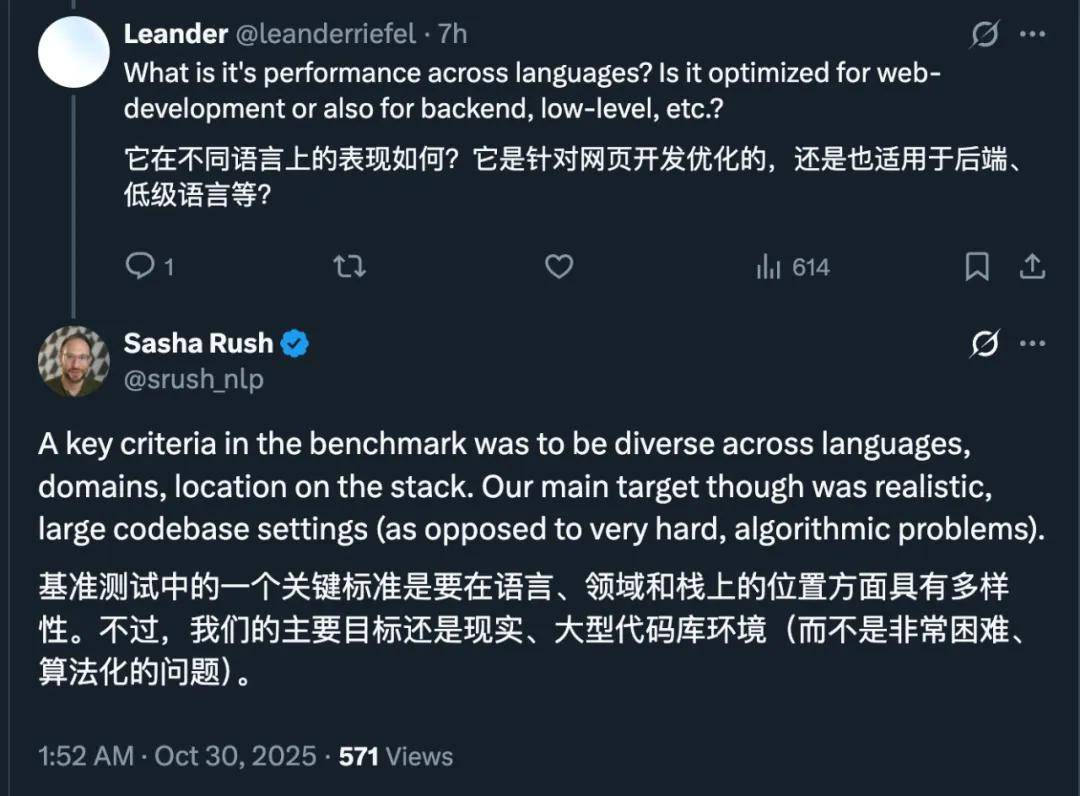
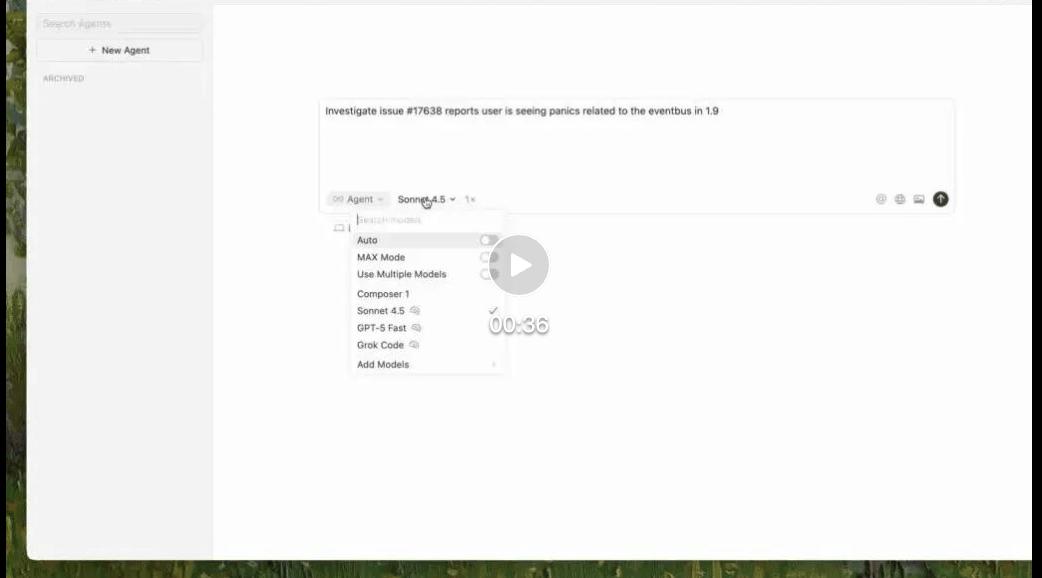
Specifically, during training, Composer utilizes a suite of production-grade search and editing tools and is tasked with efficiently solving various complex problems.
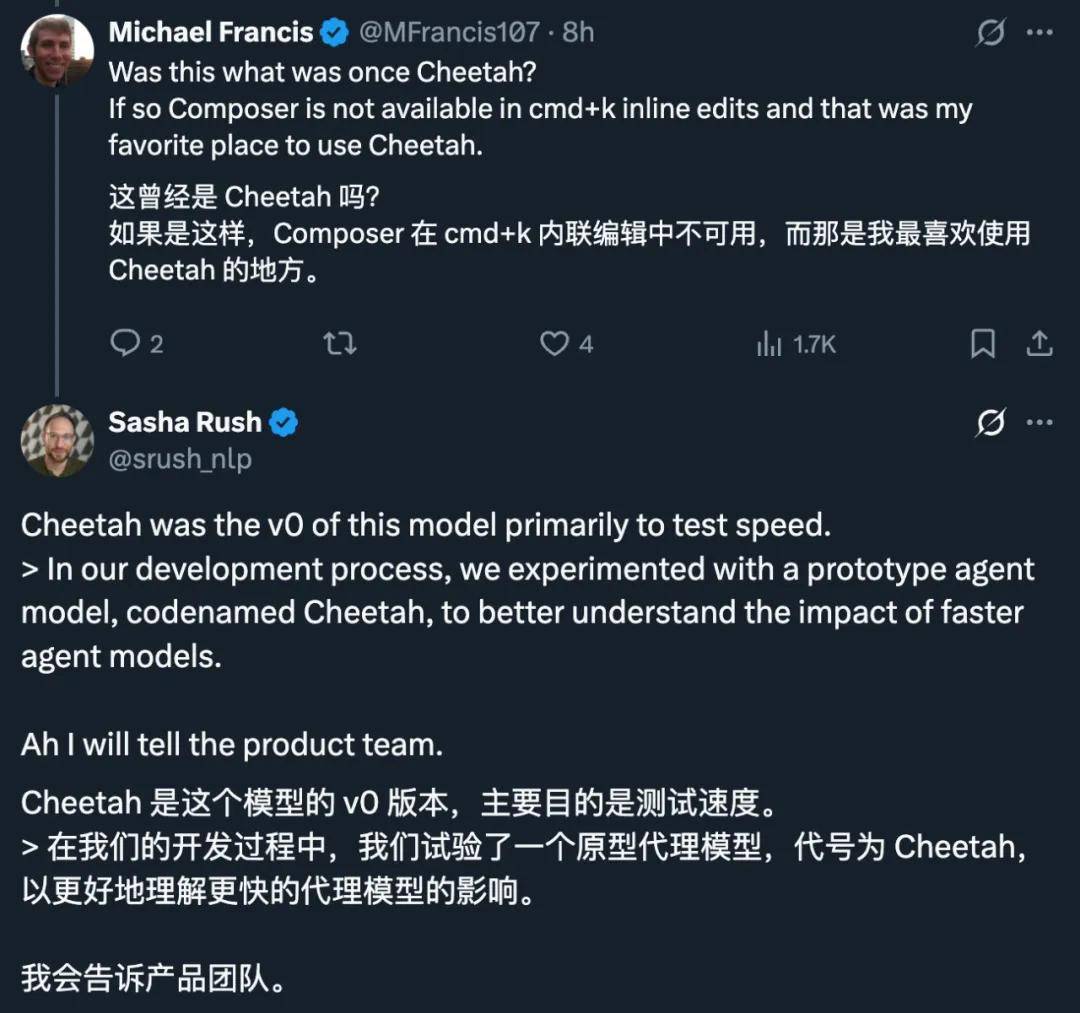
The development of this model was driven by the Cursor team’s experiences while developing Cursor Tab (their in-house completion model). They found that developers often want a model that is both intelligent enough and supports interactive use to maintain focus and fluidity in coding. During development, they experimented with a prototype agent model codenamed Cheetah to better understand the impact of faster agent models. Composer is a smarter upgrade of this model, providing sufficient speed to support an interactive experience, making coding enjoyable and smooth.
Architecturally, Composer is a mixture of experts (MoE) model that supports long-context generation and understanding. It is specifically optimized for software engineering through reinforcement learning in diverse development environments. In each training iteration, the model receives problem descriptions and is instructed to produce the best responses, whether for code modifications, planning solutions, or informative answers. The model can utilize simple tools for reading and editing files, as well as more powerful capabilities like terminal commands and semantic search across entire codebases.
To measure progress, they built a new benchmark test, Cursor Bench, composed of real agent requests submitted by Cursor engineers and researchers, along with carefully curated best solutions. This evaluation not only examines the correctness of the agents but also assesses their adherence to existing abstractions and software engineering practices within the codebase.
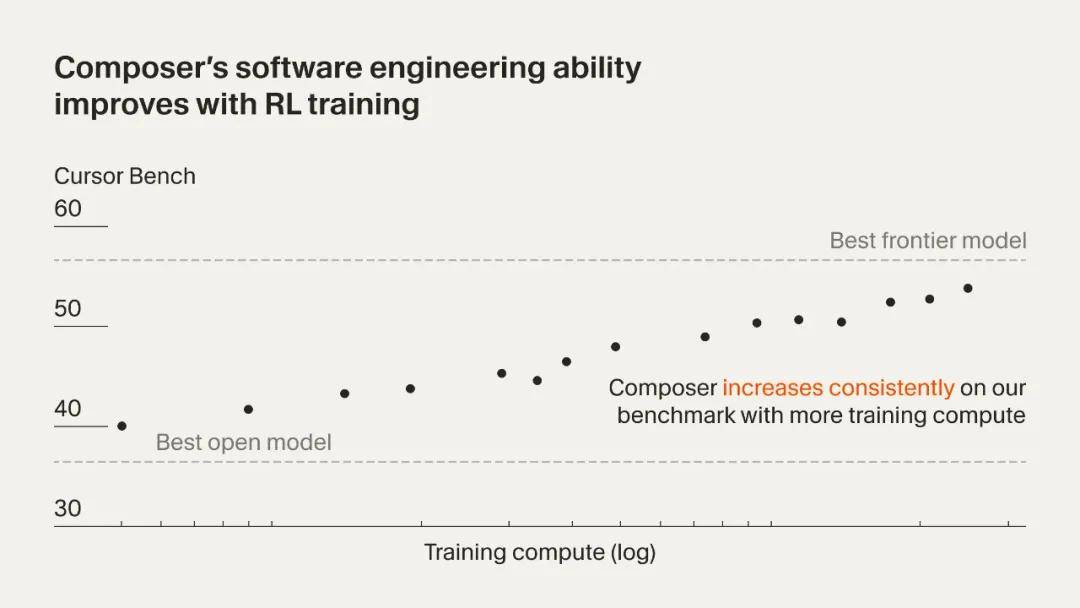
Reinforcement learning has enabled targeted optimizations of the model to better serve efficient software engineering. Given that response speed is crucial for interactive development, they encourage the model to make efficient choices in tool usage and maximize parallel processing whenever possible. Additionally, they train the model to reduce unnecessary replies and avoid baseless statements. They also found that during the RL process, the model spontaneously acquired useful abilities, such as performing complex searches, fixing linter errors, and writing and running unit tests.
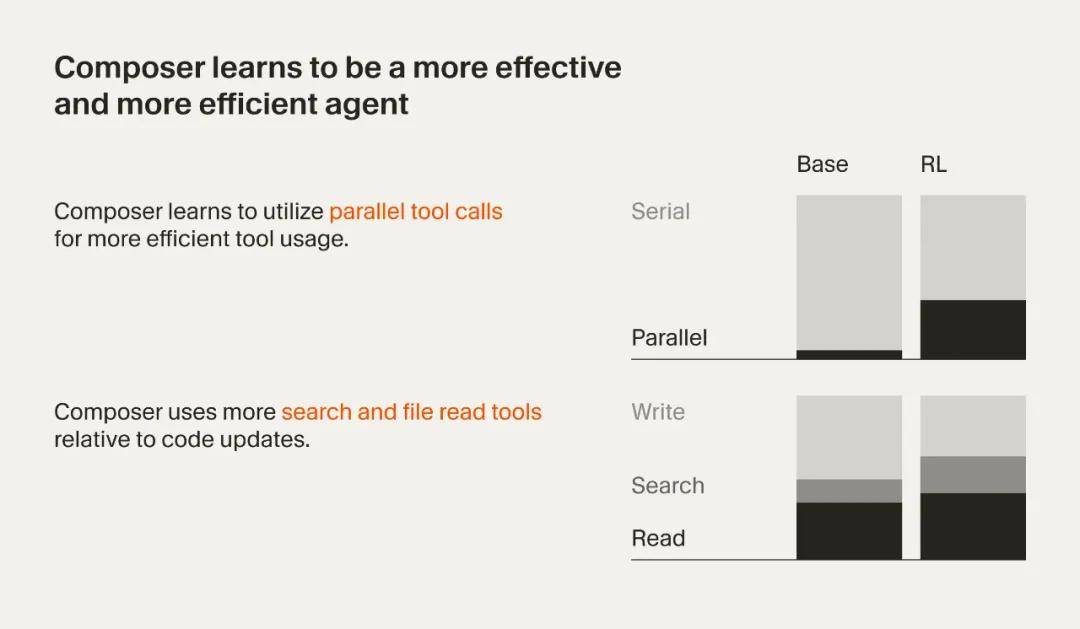
Composer is already being used by Cursor’s engineering team in their daily development, indicating its maturity and stability.
Currently, Composer is fully integrated into Cursor 2.0, marking a significant update to the company’s intelligent development environment.
Multi-Agent Interface
Cursor’s interface design has also been revamped.
The blog states that this version is more focused, centering entirely around “agents” rather than traditional file structures. This allows users to concentrate on desired outcomes while letting agents handle tedious details. When deeper code exploration is needed, users can easily open files in the new layout or switch back to the classic IDE interface.
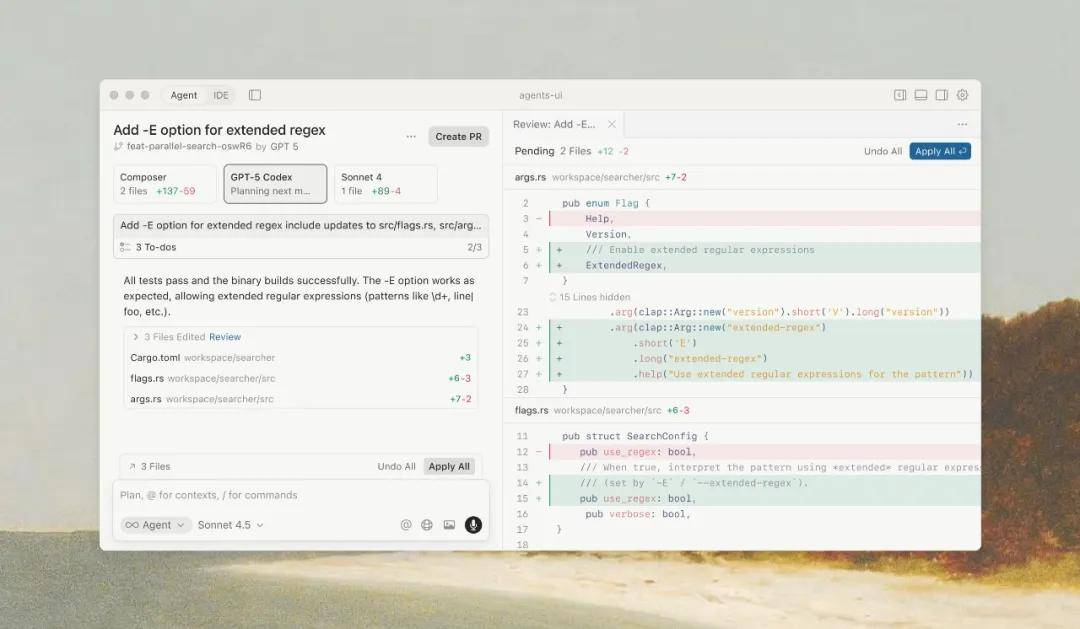
Cursor 2.0 can easily run multiple agents in parallel, with each operating independently. This is made possible by support for git worktree or remote machines. Cursor mentions, “We have even found that having multiple models attempt the same problem simultaneously and selecting the best outcome can significantly enhance final results, especially on more challenging tasks.”
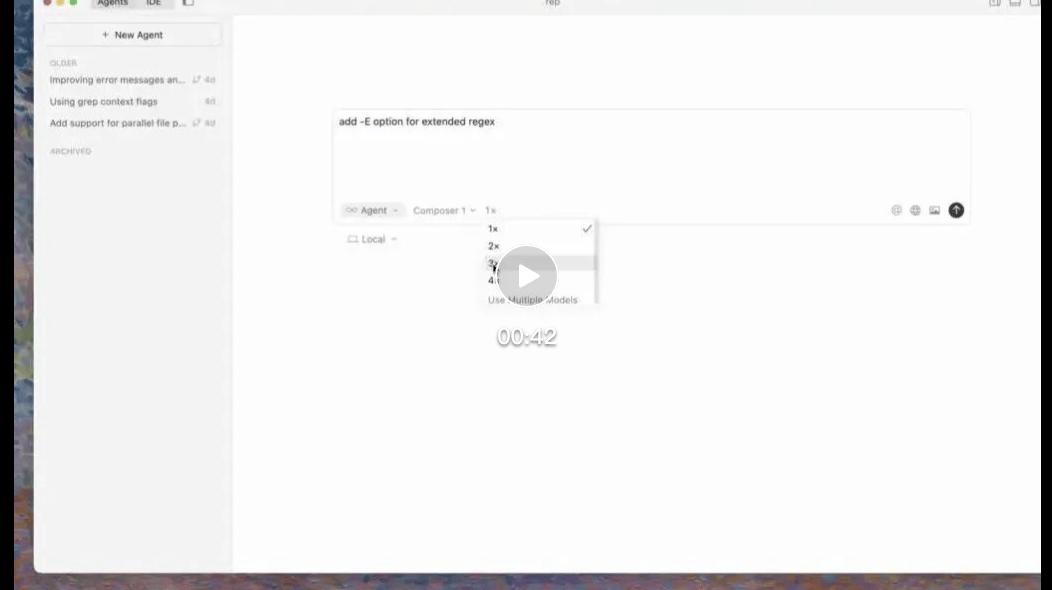
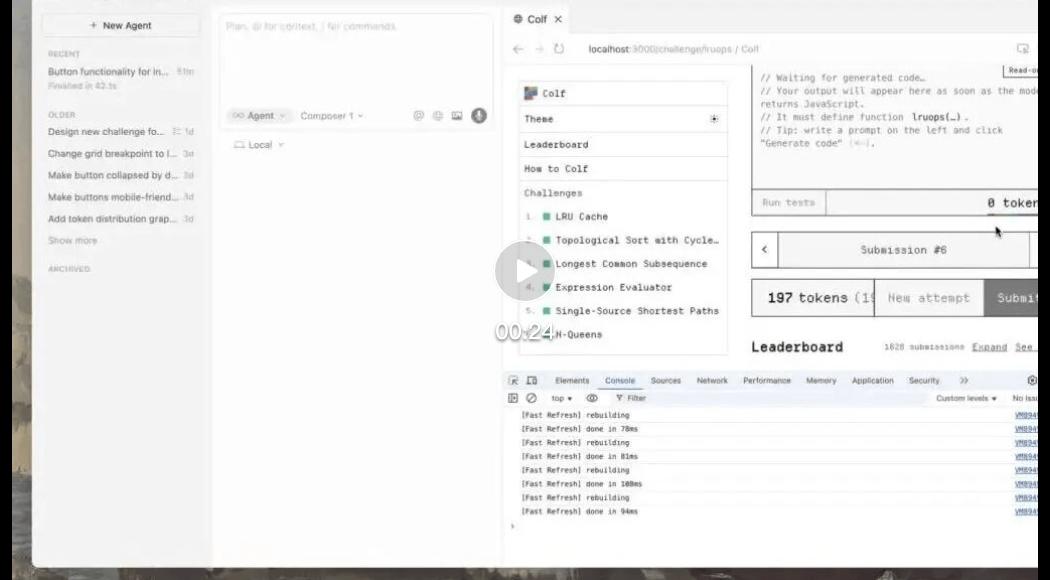
The every.to blog shared some testing examples, such as the one below, where three different models ran the same task: Composer 1 Alpha ran twice, and Grok Code ran once:
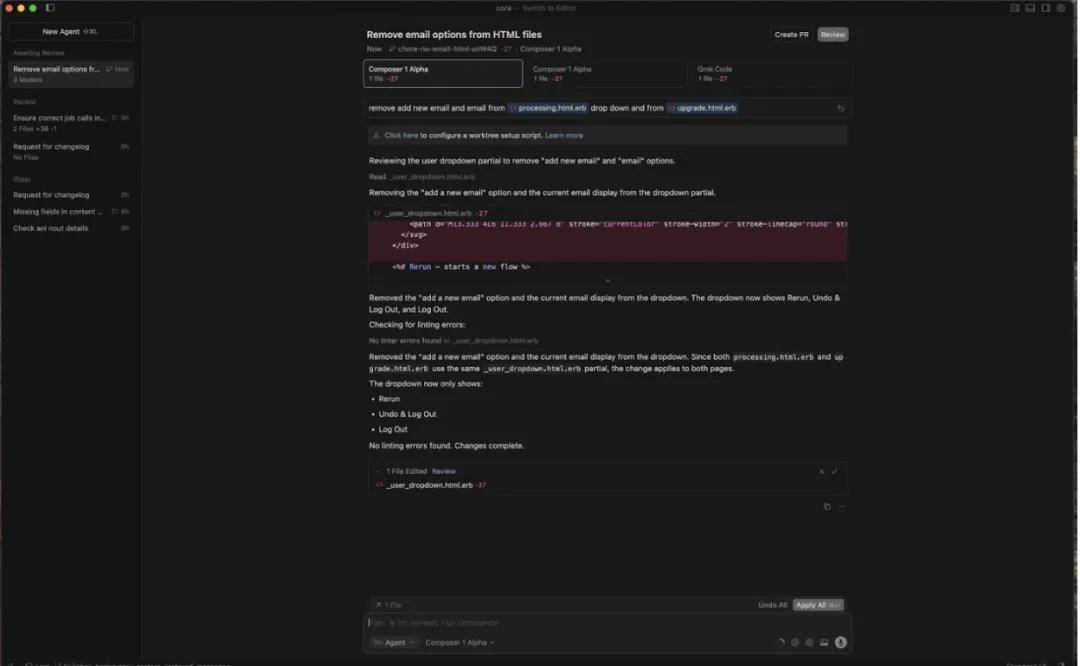
The blog noted, “Now, developers can run multiple AI agents simultaneously, with each agent responsible for different parts of a project, each part referred to as a work tree. This is akin to a group of interns each handling different chapters of this article and reporting back to me at the same time.”
Additionally, Cursor’s officials mentioned that as they increasingly use agents for coding, two new bottlenecks have emerged: code review and change testing.
Cursor 2.0 also begins to address these two issues, supporting faster reviews of agent changes and allowing for deeper code dives when necessary.
At the same time, they have built native browser tools so that Cursor can test its work and iterate continuously until the correct final result is produced.
Infrastructure
Efficient training of large MoE models requires substantial investment in infrastructure and systems research. The team has built a customized training infrastructure based on PyTorch and Ray to support asynchronous reinforcement learning in large-scale environments. They combine MXFP8 MoE kernels with expert parallelism and mixed sharding data parallelism to train models in native low precision, allowing training to scale to thousands of NVIDIA GPUs with minimal communication overhead. Additionally, MXFP8 training enables faster inference speeds without the need for post-training quantization.
During RL, the team aims for the model to utilize any tools within the Cursor Agent framework. These tools can be used for editing code, conducting semantic searches, using grep to find strings, and running terminal commands. Given Cursor’s scale, efficiently enabling the model to call these tools requires concurrently running hundreds of thousands of isolated sandbox coding environments in the cloud. To support such workloads, the team has revamped the existing Background Agents infrastructure and rewritten the virtual machine scheduler to accommodate the burstiness and scale of training runs, seamlessly unifying the RL environment with the production environment.
Community Feedback
As a star AI programming tool, Cursor’s major version update has naturally attracted significant attention.
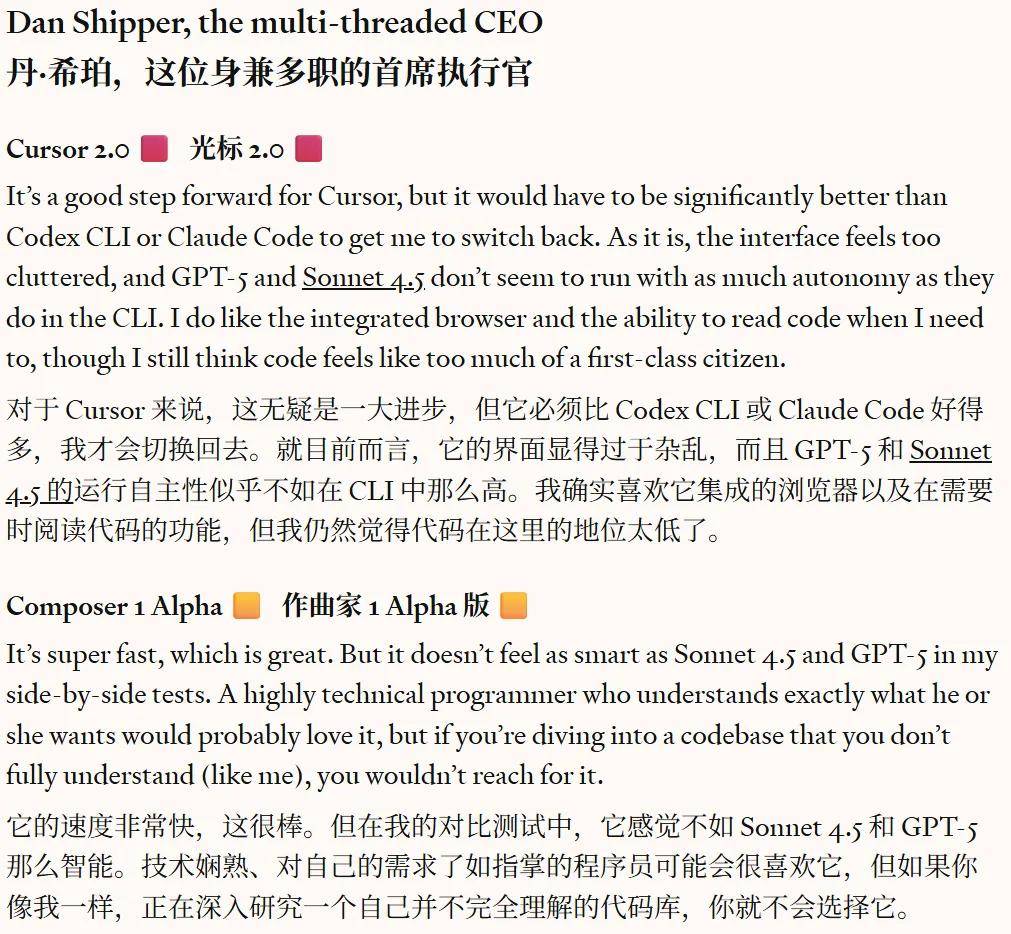
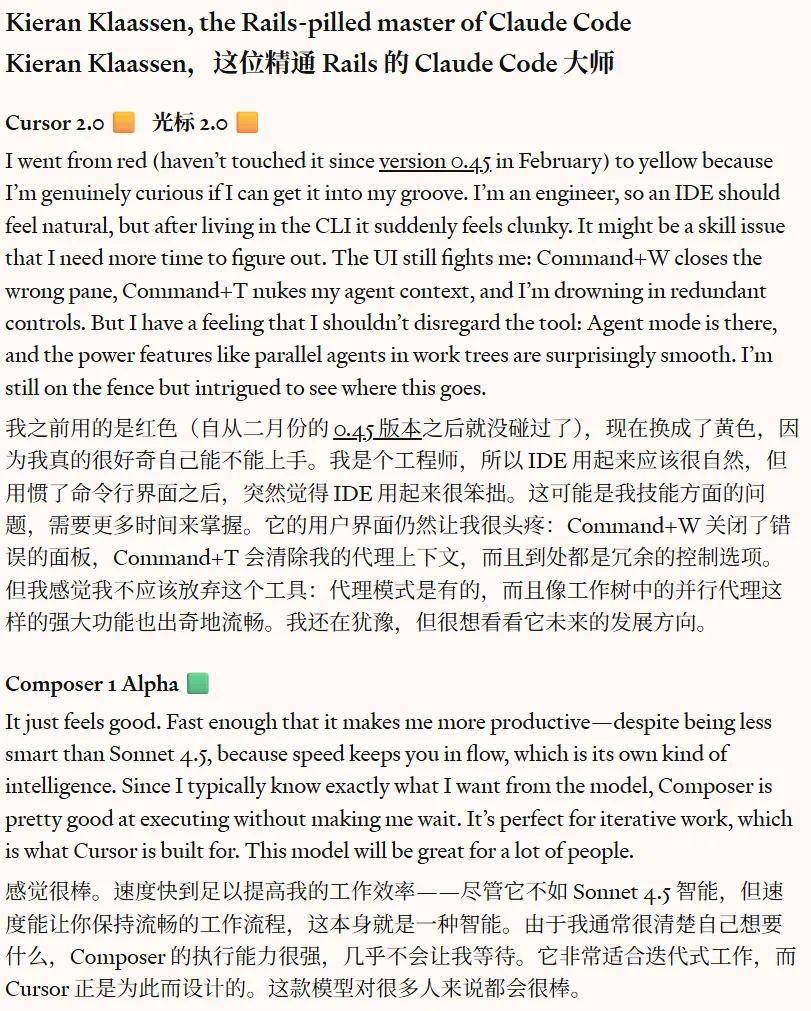
Developers who participated in early experiences have given positive feedback. For instance, the every.to blog collected opinions from several developers, which included both praise and criticism:
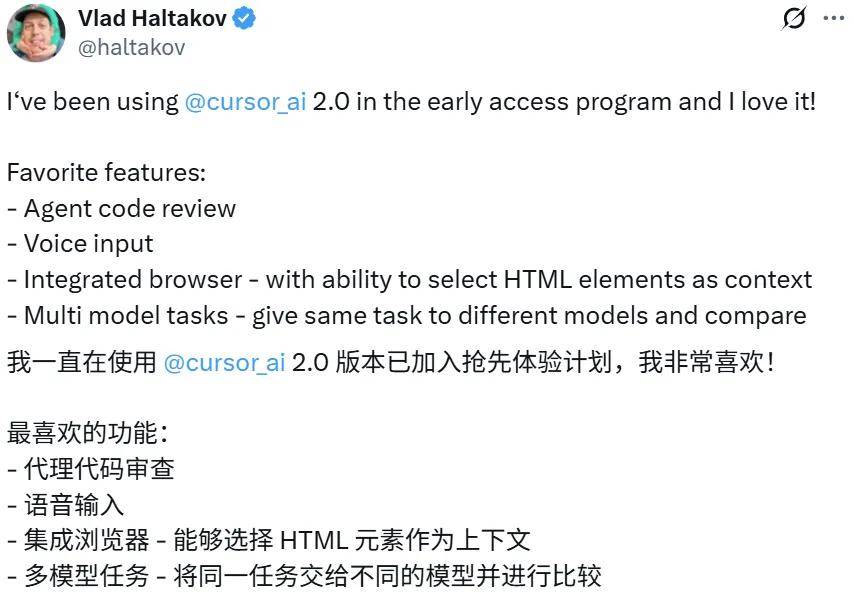
Many users on X have also shared their experiences.
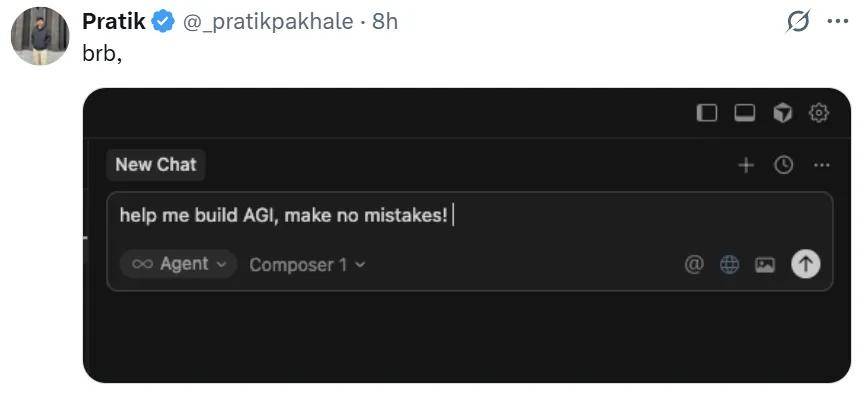
Some have humorously suggested using Cursor 2.0 to build AGI:
Comments
Discussion is powered by Giscus (GitHub Discussions). Add
repo,repoID,category, andcategoryIDunder[params.comments.giscus]inhugo.tomlusing the values from the Giscus setup tool.